
Sancrisoft Annual Summit 2026: Where Code Meets Community
Some milestones deserve more than a post on social media. Ten years of building software, earning client trust, and growing a team of people who genuinely care about what they build, that kind of anniversary deserves four days together in the mountains of Colombia.
By Marielis Ontiveros
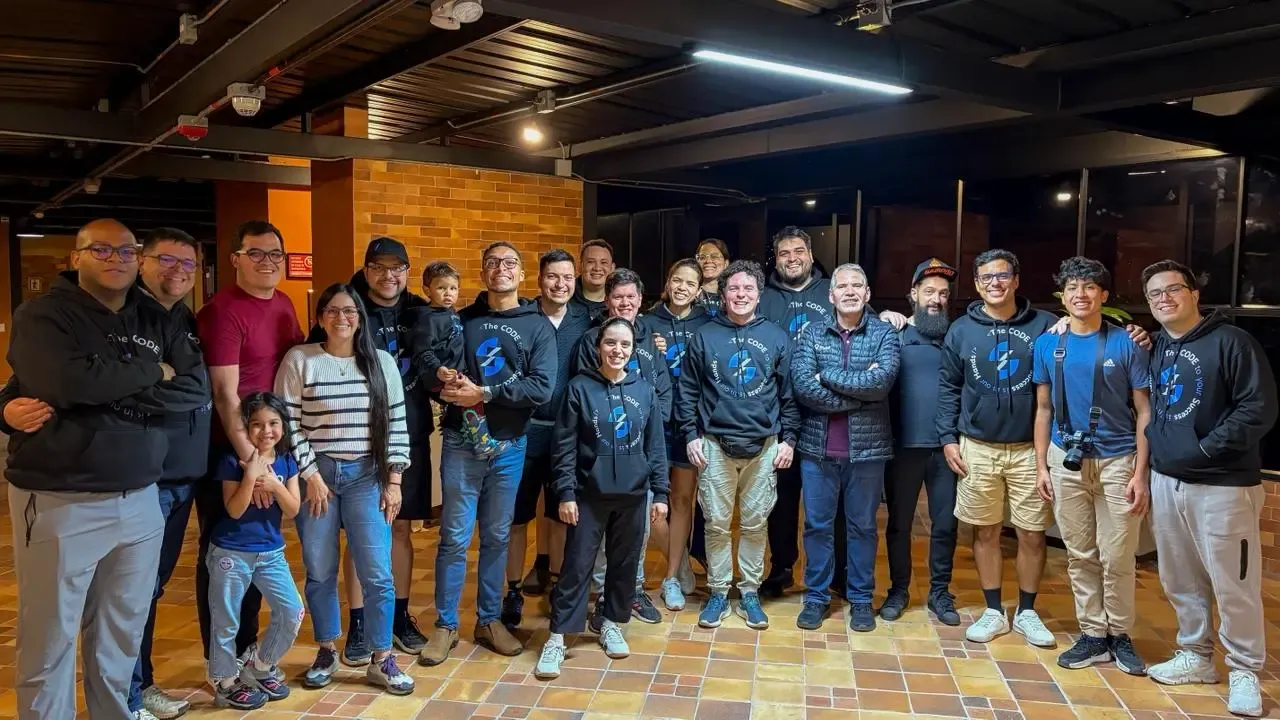
From May 1 to May 4, 2026, the entire Sancrisoft team, 24 people plus a special guest, gathered at Hotel Alfahar in El Carmen del Viboral, Antioquia, for our Annual Summit 2026. It was part retreat, part deep dive learning experience, and part celebration. And it was exactly the kind of event we believe makes a nearshore development team different from a contractor list.
A Decade in the Making
Ten years is a long time in software development. Tools change, frameworks come and go, client expectations evolve, and the industry reinvents itself every few years. What remains unchanged, what cannot be replaced by any tool or framework, is the quality of the people and the trust they have built with one another and with the clients who depend on them.
Sancrisoft started with a small team and a belief that nearshore software development could be done differently: with senior engineers, real timezone alignment, and a partnership mindset rather than a vendor relationship. Ten years later, the team has grown, the portfolio of client work spans industries from telehealth to AI platforms, and the founding principles are still intact.
The Annual Summit is one of the ways we protect those principles, not through a memo or a values workshop, but by getting every person in the same room, or, in this case, the same mountain valley, and remembering why this matters.
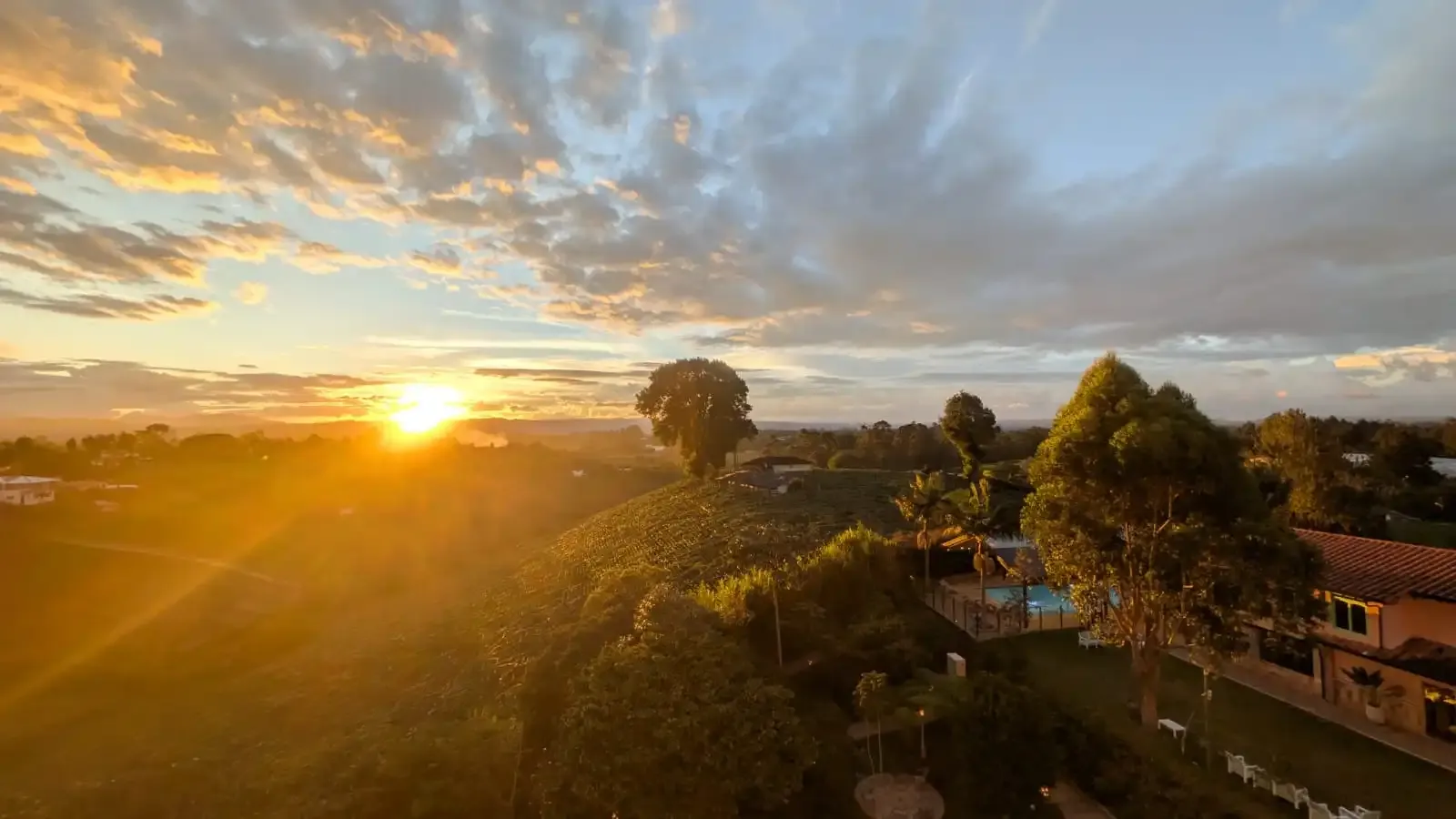
El Carmen del Viboral: The Perfect Setting
El Carmen de Viboral is a municipality in the Eastern Antioquia region of Colombia, about two hours from Medellín. It is known throughout the country, and beyond, as Colombia's ceramic capital, a place where the tradition of hand-painted pottery has been passed down for generations and where the workshops still operate the same way they always have: clay mixed by hand, fired in kilns, painted with patterns that are never the same twice.
The climate is what Antioquians describe as tierra templada, mild, fresh, with the kind of air that makes you want to slow down. The landscape is a patchwork of farms, flower greenhouses, cattle pastures, and forested hills. It is not a place where you feel the urgency of a deadline. It is a place where conversations go deeper and ideas have room to breathe.
Hotel Alfahar provided the backdrop for all of it: a warm, welcoming property with the kind of hospitality that Colombia's growing reputation as a tech and tourism destination is increasingly associated with. The food alone was reason enough to come back.
Learning to Think Differently About AI
If there was a single day that defined the intellectual heart of this summit, it was Saturday, May 2.
We spent six hours, interrupted only by lunch and short breaks, in a live workshop led by Aníbal Rojas, Senior VP of Technology Emeritus and one of the most rigorous technical thinkers we know on the subject of artificial intelligence. Every attendee had their laptop open. This was not a lecture; it was a working session.
What Aníbal Rojas Brought to the Room
Aníbal operates at a specific intersection that is rare to find: deep technical understanding of how AI models actually work, combined with the ability to communicate that understanding to an engineering team without oversimplifying or hiding behind jargon. His current focus is on exploring the limits of emerging AI tools, LLMs, agentic systems, the mechanics of context windows, and what it really means to build software with AI assistance rather than just using it as autocomplete.
His talk did not start with a use case or a productivity metric. It started with a provocation: most of what developers believe about Large Language Models is wrong. Not wrong in a way that makes them less useful, wrong in a way that makes them harder to use well.
Six Hours That Changed How We Talk About LLMs
The workshop walked through several key frameworks that reshaped how our team thinks about AI-assisted development. A few of the ideas that generated the most discussion:
LLMs are not databases. They do not retrieve stored facts; they generate plausible continuations of text based on pattern compression. That distinction changes how you should use them, how you should verify their output, and why Claude and similar tools require structured context rather than vague questions.
Hallucinations are not bugs; they are a feature. Aníbal introduced a framework for thinking about hallucinations as either value-adding (positive hallucinations that generate novel, useful connections) or value-destroying (negative hallucinations that introduce errors). The goal of good AI workflow design is not to eliminate hallucinations but to maximize the positive ones and catch the negative ones before they compound. This reframing landed differently for a team that had already been thinking about how AI agents work in our development workflows.
Steering and Backpressure are the core disciplines. Aníbal described the two dimensions of working effectively with AI coding assistants: steering (creating the conditions, codebase quality, documentation, AGENTS.md files, structured prompts that increase the probability of positive outputs) and backpressure (the feedback mechanisms, compilers, linters, test suites, verification prompts that catch and correct negative outputs before they persist). These two concepts gave our team a vocabulary for something we had been doing intuitively but not articulating precisely. They also connect directly to the principles we have documented in our AI development manifesto and the broader argument about how AI is transforming software development.
The context window is not infinite, and it does not work equally when it is full. This was one of the most practically useful technical points of the day. Understanding how context compaction works, why information at different positions in the context window has different effective weight, and how to architect your interaction with an AI assistant to account for this, these are the kinds of insights that separate developers who use AI well from those who use it frequently but ineffectively.
By the end of the session, the team was not just talking about AI tools differently. We were asking different questions. And that shift in the quality of the questions is what we brought home from El Carmen del Viboral.
Beyond the Screen: Activities That Built the Team
A summit is only as good as what happens when the presentations end. At Sancrisoft, we believe that high-performing teams are not built in standups or sprint reviews; they are built in the moments between the work, when people show up as people rather than as their job titles.
Ceramic Art at Cerámicas El Dorado
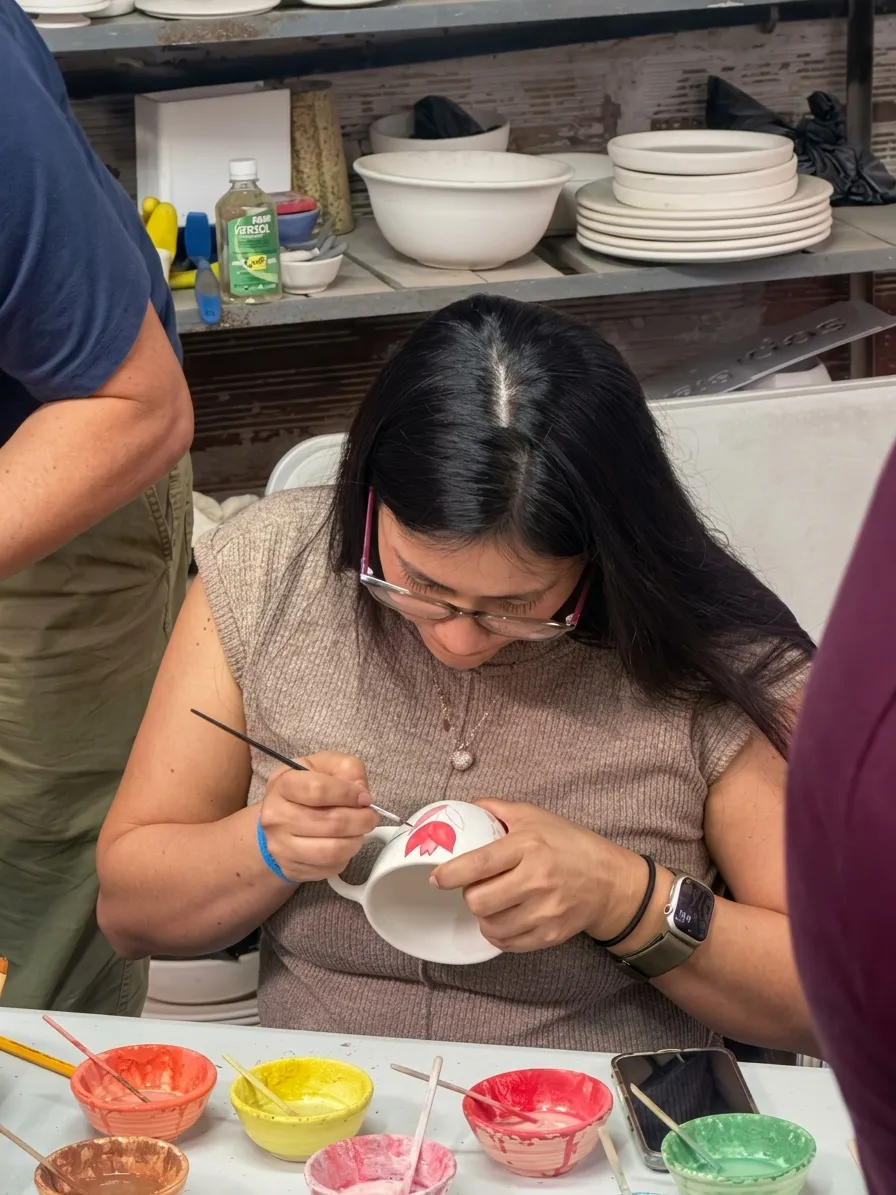
On Friday afternoon, before the summit officially opened, we visited Cerámicas El Dorado, one of the traditional ceramic workshops that has made El Carmen del Viboral famous throughout Latin America.
We learned the full process: how the clay is mixed, shaped in molds, left to dry, fired in kilns at temperatures maintained for over six hours, sanded for smoothness, and then hand-painted before a second firing that sets the decoration permanently. No two pieces come out the same. The variation is not a flaw; it is the proof that a human hand was involved at every step.
Each member of the team decorated their own ceramic mug. The results were as varied as the people painting them: careful and precise, spontaneous and expressive, geometric, floral, and abstract. It was the first activity of the summit, and it set exactly the right tone: slow down, pay attention, make something with your hands.
A Social Network Built in a Weekend, Without a Single Line of Code
One detail that deserves its own mention, and its own article, was something we built specifically for the summit: a mini social network, created with AI without writing a single line of code. Every team member was a subscriber. Throughout the four days, the group shared photos, summit memories, the event agenda, and award recognitions in real time, all through a platform that did not exist before we arrived in El Carmen del Viboral. It was, in its own way, the most direct demonstration of the week's central theme: AI as a tool that puts capabilities in the hands of people who know what they want to build. We will tell that story in full soon.
A Wine Tasting Worth Remembering
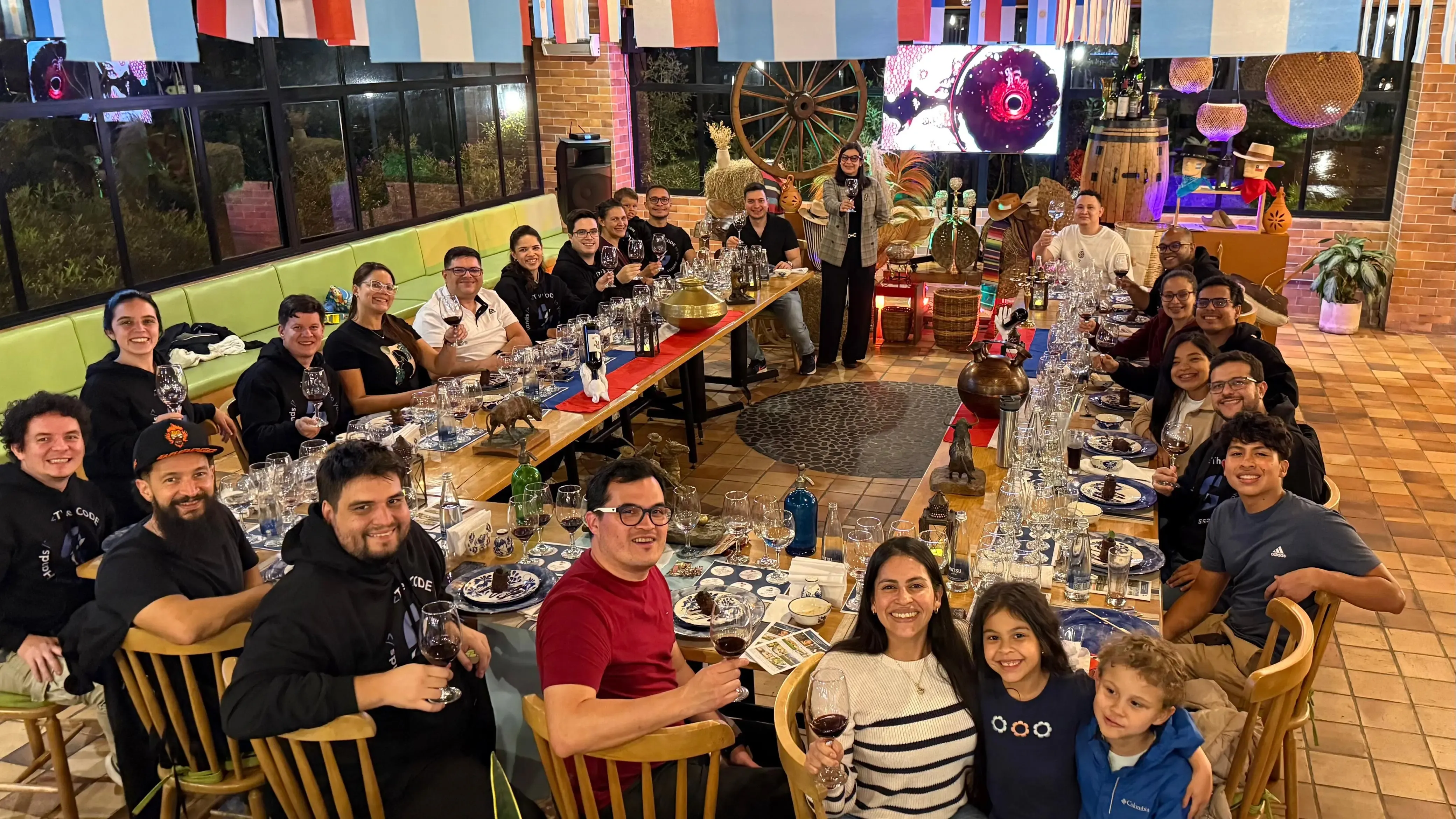
Saturday evening brought one of the more memorable experiences of the summit: a formal wine tasting and dinner pairing organized by Hotel Alfahar, featuring four wines from Argentina and Chile.
The wines, a Malbec from Finca Escorihuela Gascón in Mendoza, a Merlot Reserva from Santa Helena in the Colchagua Valley, a Malbec Barrel Select from Finca Las Moras in Valle de Tulum, and a Cabernet Sauvignon from San Pedro's 1865 Selected Vineyards, were each paired with dishes that pulled out different dimensions of the wine's character. The sommelier walked the group through the terroir, the production philosophy, and the pairing logic for each selection.
It was the kind of experience that rewards slowing down. Each wine told a different story: the altitude of the Mendoza highlands, the Pacific influence of the Colchagua Valley, the extreme heat and dry soils of San Juan's Valle de Tulum. By the fourth pour, the table was in the middle of a conversation that had nothing to do with software and everything to do with why craft matters, regardless of the domain.
Five Kilometers of Colombian Countryside
On Sunday morning, the group set out on a five-kilometer hiking route through the countryside surrounding the hotel. The trail wound past working farms, cattle grazing in the morning mist, commercial flower greenhouses, and viewpoints that made it easy to understand why people from Medellín come to this region to breathe.
There is something about moving through a landscape together, at the pace of walking, with no agenda and no deliverables, that generates the kind of conversation that does not happen in meetings. Ideas surface. People talk about what they are working on, what they are curious about, and what they wish they had more time for. By the time the group returned to the hotel, the energy was different in a way that is hard to measure but easy to feel.
A Bonfire, a Birthday, and What Comes Next
Sunday evening closed the summit the way it deserved to close: around a bonfire, with wine in hand, and with every person in the group taking a moment to say something, a word of gratitude, a reflection on the past year, a wish for what comes next.
When everyone had spoken, someone started the birthday song. Twenty-five voices, one company, ten years old.
Why We Do This Every Year
There is a version of a software company that operates entirely at a distance, optimizes for output per hour, and treats team culture as a line item that gets cut when margins get tight. That version of a company exists. We have seen it. We have also seen what it produces: talented engineers who do not trust each other, codebases that reflect the fragmentation of the team that built them, and client relationships that never deepen past the transactional.
Organizational culture is not a soft metric. For a nearshore development team working across time zones with US clients who are trusting us with their most important technical work, the quality of the trust inside the team is directly related to the quality of the work that the team produces. The Annual Summit is one of the most important investments we make in that trust.
The AI workshop was the most technically substantive session we have ever brought to a company retreat. The ceramic workshop was the most quietly meaningful. The bonfire was the most honest. They were all the same event because they were all expressions of the same belief: that great software is built by great teams, and great teams are built by great people who know each other as people.
Ten years in, we are more convinced of that than ever.
Come Build With Us
If the kind of team and culture you have just read about sounds like a place where you would do your best work, we are always looking for engineers, designers, and builders who want to be part of something more than a project.
Explore open positions at Sancrisoft and see if there is a fit.
And if you are a company looking for a development partner who brings this kind of team to your work, get in touch. We would love to tell you more about what we build and how we build it.